Autonomous
Manufacturing Studio
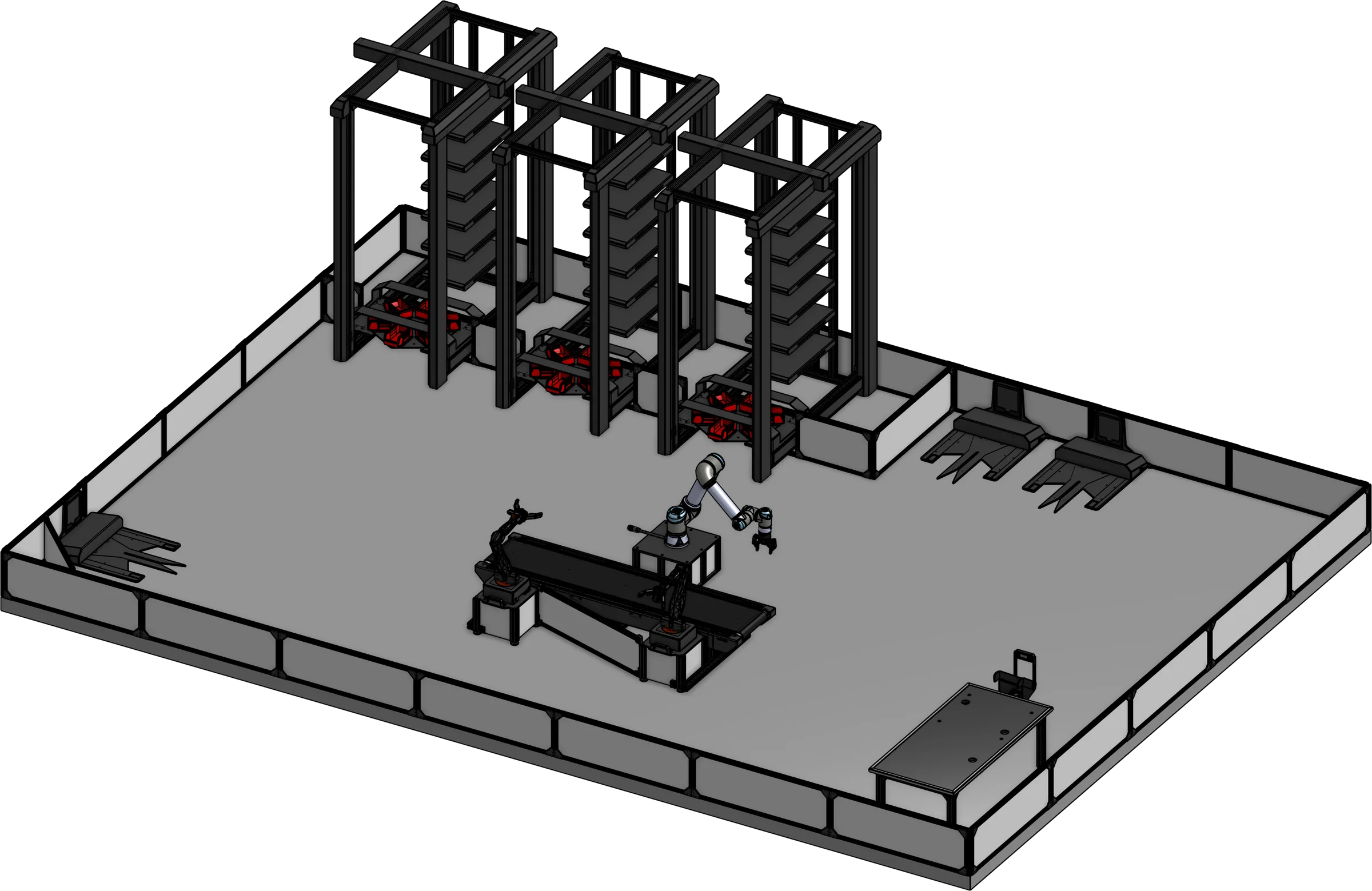
One control system keeping six autonomous robots, a UR5e arm and 10+ factory endpoints in sync, programmable from a browser by the students learning on it.

Aggressively Fast, Stubbornly Reliable
Bridging electrical, mechanical, and software systems, building the logic layer beneath automated robotics.
Majoring in Electrical & Computer Engineering with a passion for Control Systems and Mechatronics.
I was selected by the Dean of CBU's Bourns College of Engineering for a paid internship leading the control system overhaul of CBU's Autonomous Manufacturing Studio.
On the CBU Long Knights VEXU robotics team, I've worked across the Software,Electronics and Mechanical divisions, including as Responsible Engineer for the robot's RS-485 communication network.
One control system keeping six autonomous robots, a UR5e arm and 10+ factory endpoints in sync, programmable from a browser by the students learning on it.

Project pages are still in development, more details coming soon
What I’ve built for the CBU Long Knights’ VEXU robots, across disciplines: the RS-485 sensor network, a redesigned match loader mechanism, CAD housings and the robot’s lighting.
A node-graph LED engine for ESP32. Built as a robot status display, it's now the foundation for a show controller that syncs lighting across devices.
A wired data network for ESP32 sensor nodes: a Modbus-inspired binary protocol on custom PCBs, built so every packet is known delivered.
Ride control for Minecraft theme parks: block-zone safety logic that runs trains at minimum spacing and heals itself when the server misbehaves.
AI is a collaborative assistant, not a creative mind
As AI has entered into work environments as a productivity booster, I've seen polarizing views on how much creative influence AI should have in our work. Some use AI for everything, vibe coding their way through a project until they've lost touch with how it is designed and actually works. Others resist using AI, trading off speed and efficiency and often reinventing the wheel when solutions already exists.
I spent years building everything by hand, ground up. It taught me to think critically through problems, then visualize and research the best solution. This process created a solid foundation of engineering skills. However, the approach is tedious, and it requires remembering every intricate detail about a project: a blessing and a curse when a project grows and requires scale.
For the past few years, I have settled into a middle ground of using AI for what it excels at, productivity and acceleration. I set the vision and direction, and plan exactly what I want the architecture to look like. AI then challenges and refines my plan, executes deep research on feasibility, and runs extensive test cycles to ensure performance. I collaborate with AI throughout the full project lifecycle to create, refine and harden the final product.
Expectations keep climbing on both speed and quality,and I've found that AI raises quality first and foremost. When working with AI, it helps us design systems right the first time and we spend less time recursively debugging. Speed then follows quality, for those who know how to effectively and responsibly use Artificial Intelligence.
Open to internships in Advanced Robotics & Control Systems
I am actively seeking my next internship for the spring or summer of 2027. If you are looking for a full-stack engineer with experience in embedded systems, controls, and mechatronics, I would love to share my experience and learn more about the opportunity.